

The dawn broke as our canoe cut through the morning mist. Last evening, we noticed a couple of fishing nets cast across a stretch of a canal that connects to Vembanad Lake. Today, we found a fishing boat stationed at the same spot. A fisherman was meticulously drawing in the net towards him while carefully eyeing the catch inside it. Without making any noise, we slowly drifted along another route, lest we disturb the catch, as silence is something most precious when fishing is underway.
Fisherfolk in the Kumarakom backwaters generally prefer the quieter hours of the day, when natural light is low, for their daily fishing routines. They believe these are the times when the chances of a substantial catch are higher, helping sustain their families and livelihoods. This also means that we can never quite predict when we might come across them at work. They tend to choose quieter stretches of the waterways, preferably away from crowds, allowing them to go about their work undisturbed. And that makes an encounter like this yet another unscripted moment in the lived landscape of the Kumarakom backwaters.
How do the Kumarakom Backwaters support fishing as a local livelihood?
The backwaters of Kumarakom have sustained generations of fishing communities, with the network of canals, interconnected waterways and the expansive Vembanad Lake providing an important source of livelihood. Fishing here is not merely an occupation but a way of life shaped by the natural environment, seasonal changes and an intimate understanding of the water.
For many local families, the backwaters are closely connected to their everyday sustenance. The fishing grounds, the equipment they use and the hours they choose to venture out are all part of a familiar routine developed through years of experience. Their understanding of the waterways is often acquired through observation and passed down through generations, making fishing an occupation that requires considerable patience, skill and familiarity with the landscape.
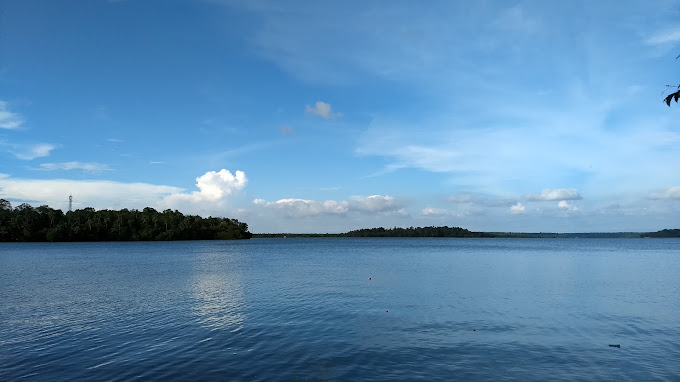
The canals that visitors often admire for their tranquil beauty are, therefore, much more than picturesque waterways. They are working spaces that support communities, connect livelihoods and form an important part of the local economy. The fishing boats that occasionally appear along these stretches are reminders of this enduring relationship between the people of Kumarakom and the waters that surround them.
It is perhaps this coexistence of livelihood and landscape that makes the backwaters so interesting. While the water offers visitors an opportunity to slow down and appreciate nature, it continues to provide for those whose lives and livelihoods are intrinsically connected to it.
What to expect when you accidentally observe a catch along your way on the canoe cruise?
One of the interesting aspects of exploring the Kumarakom backwaters in a traditional canoe is that there is very little predictability about what you might encounter along the way. Unlike a scheduled village visit or a curated activity, observing local fishing is not something that can be timed or promised as part of a cruise.
As we mentioned earlier, fisherfolk generally prefer quieter hours, often choosing periods when natural light is low and there is little disturbance around their fishing grounds. Consequently, you may come across a fisherman drawing in his nets during an early morning canoe ride, or perhaps notice a fishing boat stationed along a canal during an evening excursion. On other occasions, you may simply pass through the same waterways without encountering anyone at work.
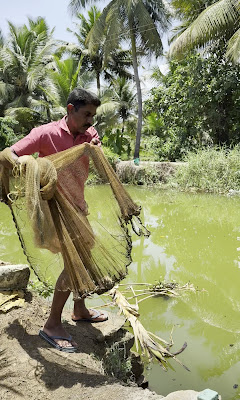
When such an opportunity does present itself, it is worth taking a moment to observe, provided we can do so without disturbing the fishermen or interfering with their work. You might notice the careful handling of fishing nets, the concentration with which they examine their catch or the quiet coordination involved in going about their task. There is no elaborate demonstration or commentary accompanying these moments. They unfold naturally, offering a glimpse into an everyday occupation that has been part of Kumarakom for generations.
For us, these are among the more meaningful encounters that can happen during a canoe cruise. They allow visitors to see the backwaters beyond their familiar postcard imagery, bringing them a little closer to the people and livelihoods that give this landscape its character. And while we cannot guarantee when or where such an encounter might happen, the possibility of witnessing one is part of the charm of exploring these waterways at a slower pace.
What does a passing moment tells us about Kumarakom?
The fishing boat we encountered that morning was only one of the many sights that the canals of Kumarakom reveal to those who spend time exploring them. It reminded us that the backwaters are not simply a beautiful setting for a holiday. They are an integral part of a living landscape where people continue to work, travel, fish and carry on with their everyday lives.
It is easy to associate Kumarakom with its canoes and houseboats, expansive stretches of Vembanad Lake, coconut-fringed canals and the changing colours of the evening sky. These are undoubtedly some of the reasons travellers are drawn here. But beyond these familiar attractions lies another dimension of the destination, one that becomes visible when we look beyond the scenery and pay attention to what is happening around us.
A fisherman going about his morning routine, a small boat carrying someone across a canal or a family tending to its daily chores along the water's edge may not appear particularly extraordinary. Yet, these ordinary moments are as much a part of Kumarakom as its celebrated backwater views. They give the landscape its rhythm and remind us that we are travelling through a place where life continues much as it always has, irrespective of who happens to be visiting.
If we can reflect on it, we might understand that the experience of a destination becomes richer when we learn to appreciate these everyday realities without expecting them to become attractions. Sometimes, simply being present and observing without interruption is enough.
Leaving room for the unexpected
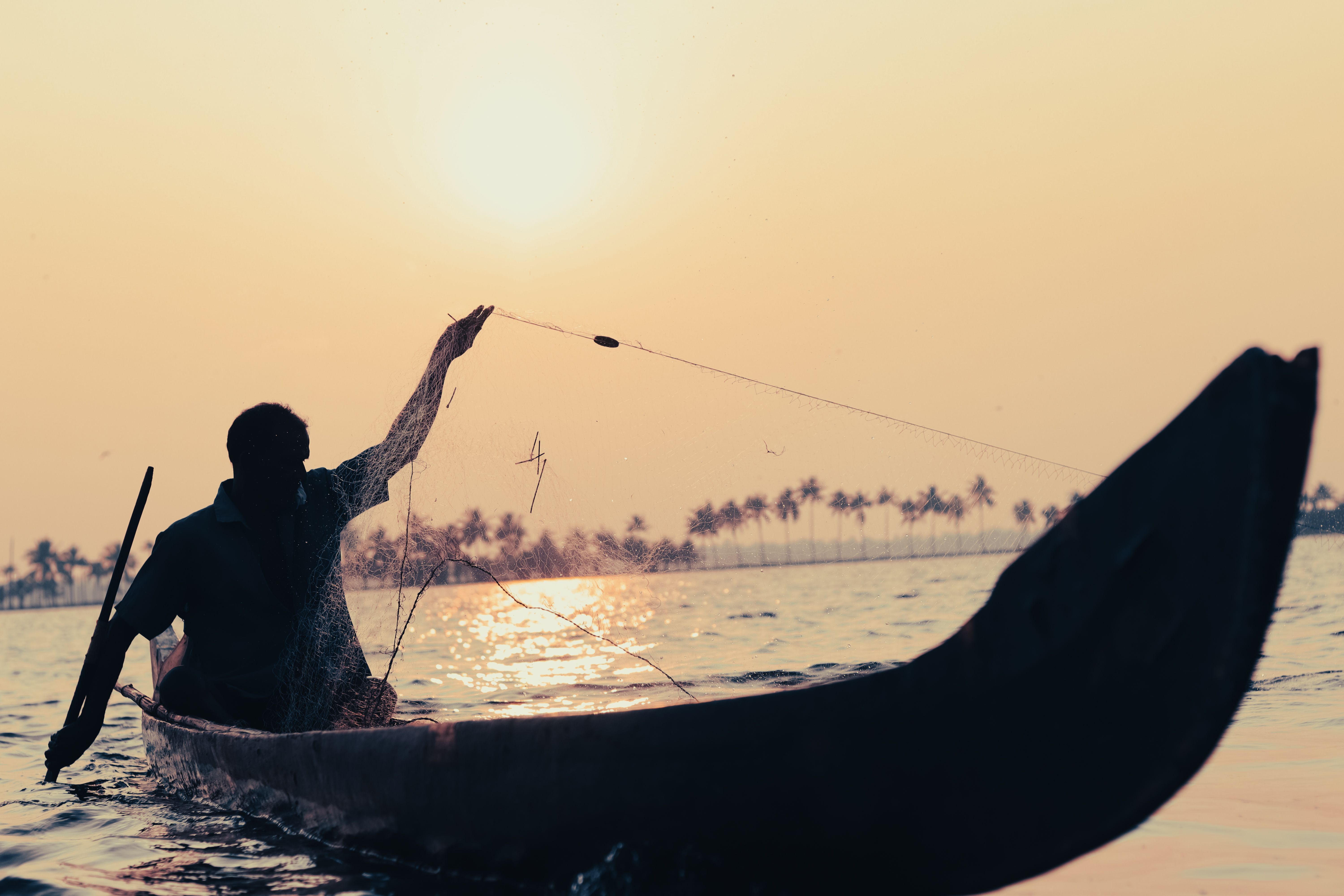
The fishing boat may have remained in our view for only a few minutes that morning, but the encounter offered us a small window into the everyday life of Kumarakom, one that we had neither planned nor anticipated.
Perhaps this is one of the quiet pleasures of exploring Kumarakom by its canals. You set out to experience the backwaters, but somewhere along the way, the backwaters introduce you to something you had not thought to look for.
Our local experts have always believed that exploring a destination is as much about what unfolds along the way as it is about reaching a particular place or experiencing a planned activity. The familiar sights may draw us here, but it is often these little, unscripted encounters that give us a more personal understanding of the landscape and the people who call it home.
And there are occasions when the most memorable catch along the way may not be what comes out of a fisherman's net, but rather a fleeting glimpse of the lives that continue quietly along the waterways of Kumarakom.